Website Design Services for Business Goals
Website design should help the right visitor understand a business, find the information they need and take a useful next step. Web Design Plus SEO plans customer-facing business websites and redesigns remotely nationwide from its Doral, Florida location. The work should begin with your audience, offer, current site and project constraints. Discuss a website project and the decision you want the site to support.
A redesign is more than a visual refresh. Page structure, content, mobile use, accessibility, search requirements, forms and existing tools can all affect the result. The agreed scope should state what will be designed, written, built, reviewed and maintained.
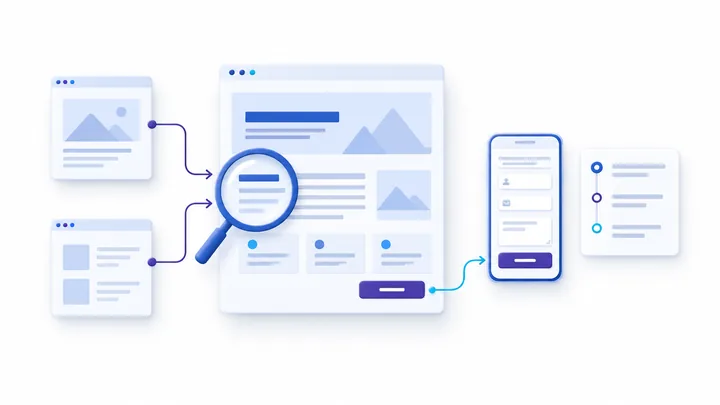
Design around what visitors need to do
Before choosing layouts or colors, define who the site serves and what those visitors need to understand. A prospective customer may need to compare services, confirm fit, review requirements, see relevant work or contact the business. The design should make those steps visible and keep important details easy to find.
Useful discovery questions include: Which services matter most? What questions arise before a customer buys? Which pages already receive meaningful visits or inquiries? What must the visitor know before using a form or calling? Are there legal, technical, language or accessibility needs? Who approves business claims and final content?
These answers shape navigation, page hierarchy and the primary action. A site does not need a separate page for every phrase or audience label. Each page should serve a clear task, and related pages should link in context. If customers cannot distinguish similar offers, content and structure may need attention before adding more design components.
Web Design Plus SEO also offers search work through SEO services and local SEO. Discuss how those fit if search discovery is part of the website project. Search work does not guarantee a specific position or volume of inquiries.
Agree on the pages, content and responsibilities
A clear website scope describes the pages and components included, what information the business supplies, what the design provider creates and how each stage is reviewed. It should identify the intended platform, the responsible owner of hosting and domain accounts, any existing content to retain, and the specific work needed to move from approved design to a usable site.
Depending on the proposal, a project may involve:
- Reviewing current pages, navigation and the questions customers need answered.
- Planning page structure and content priorities for the agreed audience and offer.
- Designing page layouts and responsive behavior for common screen sizes.
- Preparing or revising approved content, images and calls to action.
- Implementing agreed pages in the selected content system or development environment.
- Reviewing links, headings, forms, accessibility basics, redirects and search metadata within the defined scope.
This list is a set of possible tasks, not a promise that all are included automatically. Clarify whether copywriting, photography, branding, migration, ecommerce, custom code, hosting, security updates, analytics, training or ongoing maintenance are included. If another vendor owns a needed integration, confirm access, cost and technical responsibility before scheduling around it.
For a workflow-heavy internal tool or customer portal, a marketing website may not be the right project container. The existing custom software development page covers tailored business applications and links to separate AI and CRM project paths.
Make the site clear on phones and usable with different inputs
Many customers first view a website on a narrow screen. Text should remain readable without zooming or horizontal scrolling, navigation should be understandable, and important actions should not be hidden behind oversized graphics. Forms need labels, useful instructions and clear error and completion feedback. Test actual pages at common phone and desktop sizes because a design preview alone does not prove the implemented site behaves well.
Accessibility should inform structure from the beginning. Use headings in a meaningful order, descriptive link text, keyboard-visible focus, sufficient contrast and controls that can be operated without a mouse. Images that carry information need accurate alternative text; decorative images should not add noise for screen readers. Video or motion should have an appropriate user experience, including respect for reduced-motion preferences where relevant.
Accessibility requirements can vary by organization, audience and applicable rules. This page does not claim certification or legal compliance. Identify the relevant standard and have the appropriate specialist review the site when the business needs formal assurance. A design check can catch common barriers but cannot replace a complete accessibility evaluation where one is required.
Page speed also depends on implementation, hosting, fonts, scripts, image dimensions and third-party services. Use appropriately sized assets and measure the actual pages after implementation. A single lab result or visual impression does not establish performance for all visitors.
Plan search and technical needs with the design
Search-friendly design keeps important explanations in accessible page content, gives each page a clear subject, uses crawlable links and preserves useful URLs where possible. Indexable pages need distinct titles and descriptions, a clear H1, appropriate canonical and robots behavior, meaningful internal links and truthful structured data only when eligible. Pages that are private, duplicated or utility-only need a deliberate non-indexable treatment.
Before changing an existing site, record important URLs, redirects, current search value and content that must be retained. A redesigned navigation or page tree can accidentally remove useful pages, create duplicate paths or strand content. If a URL has to change, map it to a destination that serves the same need and verify the redirect and internal links.
Technical decisions include the content platform, account ownership, hosting, form delivery, integrations, backups and any custom development. The business should know who controls the domain and administrator accounts, how updates are made, what data the forms collect and how notifications reach the right person. Third-party tools may have their own fees, terms and access requirements.
After implementation, check the actual rendered page for its intended heading, content, mobile behavior, links, metadata, canonical, indexability and sitemap treatment. Confirm the form’s visible success and error behavior in an appropriate test. A page that loads is not sufficient proof that the whole customer path works.
Review examples and approvals in context
Work examples can help a buyer see the kind of deliverable a project produced. Each example should be current, approved for use and accurately described. A screenshot of a site is evidence of that screen, not proof of search results, conversion performance, revenue or ongoing client status. Do not infer that an old portfolio description establishes a current contract or a guaranteed outcome.
A practical design process gives the business clear review points. Agree who supplies service facts, imagery and approvals; who can make decisions; how feedback is consolidated; and what happens when requirements change. Review copy and layout together so that headings, buttons and forms make sense in the final context. Test important pages with representative tasks, such as locating a service, understanding coverage and finding the correct contact action.
Corrections should be made against agreed acceptance criteria. Check that approved content appears in the implemented page, the links go to the intended destinations and the layout works on actual devices. If the project includes a live form, use a controlled test and verify its response path without exposing customer data. Inbox delivery, CRM routing and analytics are separate integrations and should be tested only when they are included and access is available.
Existing published projects on the site can be reviewed as potential examples, including genuine web and software work. Before featuring a project, confirm the source details, current accuracy, permission to display its visuals and any client or outcome wording. No project proof should be invented to fill an image slot.
Understand cost, timing and ongoing ownership
Website project cost depends on the number and complexity of pages, content readiness, design requirements, integrations, migration, custom functionality and the amount of review or revision agreed. Timing depends on access to materials, approvals, third-party dependencies and the sequence of work. This page does not publish a universal price or delivery date. A proposal should spell out assumptions, deliverables, exclusions and payment terms.
Ask who owns the finished files and accounts, who pays for hosting and third-party services, who can update the site and how backups and security updates are handled. Clarify whether training, post-launch support, content changes or technical maintenance are included. A completed design project does not automatically include indefinite support.
Remote work requires a clear contact and approval path. Identify a person who can provide accurate business information and consolidate feedback. If several teams own content, legal review, IT or customer service, include those dependencies in the plan. Sensitive credentials should be shared through a secure method rather than a public form.
Web Design Plus SEO works remotely nationwide from 7500 NW 25th St, Suite 237G, Doral, Florida 33122. Start a website discussion with your current URL, target audience, main services and the changes you believe customers need.
Website design questions
Do you design new websites and redesign existing ones?
Website design can involve a new site or changes to an existing one, depending on the project and agreed scope. The discussion should establish the current platform, pages to retain, new requirements, content and technical dependencies.
Will a new design improve my search rankings?
A design alone cannot guarantee a ranking improvement. Search visibility depends on content, technical implementation, competition and external systems. Search requirements can be included in the project scope, and broader optimization is described on the SEO services page.
Do you provide copy, images and hosting?
This page does not define those as standard inclusions. A proposal should state whether copywriting, photography or image selection, hosting, domain work and post-launch maintenance are part of the project.
How long does a website project take?
Timing depends on page count, content readiness, approvals, functionality and third-party access. A realistic schedule can be set after requirements and responsibilities are clear.
Can you build a customer portal or internal application?
Those requirements may belong in a custom software project rather than a public marketing website. Review the custom software page to discuss workflows, users, data and integrations.
Where do you work?
Web Design Plus SEO is located in Doral, Florida and delivers services remotely nationwide. The city pages on this site do not represent additional branch offices.


