Local SEO Services for Businesses Serving Nearby Customers
Local SEO helps a business present accurate, useful information to people searching for services in a place the business genuinely serves. The work may involve local discovery, eligible business profiles, location pages, contact details and the mobile path from a search to an inquiry. Web Design Plus SEO is physically located in Doral, Florida and delivers services remotely nationwide. Discuss your local search needs with the places you serve and how customers work with you.
A city page or profile should reflect real operations. Serving customers in a market does not automatically mean the business has an office there, and no local SEO provider can guarantee inclusion or position in a map or organic result.
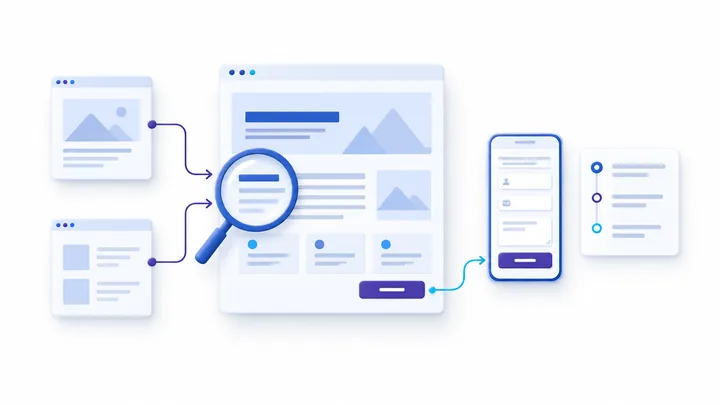
Connect local discovery with a useful next step
People searching for a nearby provider need to know whether a business offers the right service, serves their location and can be contacted. Local SEO should support that decision with consistent, accurate information and pages that answer the customer’s question. It should not create a fictional storefront or a set of city pages that repeat the same pitch.
Begin by describing how the business actually operates. Does it receive customers at a staffed location, travel to customer sites, serve a defined territory, or provide work remotely? Which services are available in which places? Are there different requirements, delivery methods or customer questions by market? These answers shape what should appear on the site and whether a location-based profile is appropriate.
Local discovery is one part of the buyer journey. A search result may lead to a website, a call or another action. Check that the destination explains the service, coverage and next step, especially on a phone. A listing can attract attention but cannot repair unclear service information or a broken contact path.
For broader organic search, page planning and technical SEO, see SEO services. When local demand points to a website clarity or mobile issue, the website design service may also be relevant.
Use business profiles only when operations qualify
A local business profile is tied to real-world eligibility and operating details. Before creating, editing or expanding one, verify the platform’s current policies and how the business interacts with customers. A staffed customer-facing place, a service-area operation and a remote business may be treated differently. The correct configuration depends on the actual facts and current rules.
Do not use a virtual mailbox, coworking address, unstaffed suite or an address where customers are not served as though it were a public storefront. Do not create duplicate profiles for individual services or target cities simply to gain more listings. If a business travels to customers, its profile details should reflect the eligible service-area model and should not expose a hidden home address improperly.
Profile completeness and accuracy are ongoing responsibilities. The business should own its account access, keep hours and contact information current, review edits and understand how calls or messages are handled. Platform interfaces and policies can change, so recommendations should be checked at the time they are applied. A profile setup does not guarantee rankings, map-pack appearance or a particular volume of calls.
Web Design Plus SEO’s confirmed physical address is 7500 NW 25th St, Suite 237G, Doral, FL 33122. This is the agency’s location. It is not evidence of a branch office in a city represented by a customer page, nor does this page recommend that another business copy the agency’s address pattern.
Create location content for a real customer need
A useful local page gives someone a reason to read it beyond seeing a place name in the heading. It can explain which services are available, who they suit, how delivery or appointments work, what local customers should prepare and how to make contact. If the business has verified examples, local regulations or distinct operating details, those may help answer the decision, provided they are accurate and permitted for publication.
Before creating another city page, compare the existing URLs and ask whether the intended customer task is genuinely different. Replacing one city name with another does not create useful market knowledge. A page that repeats broad service copy with an invented nearby office can mislead customers and create confusing ownership across the site. Often one strong service page with an honest coverage explanation is better.
Where separate city pages are justified, each should have its own useful information and a clear relationship to the relevant service owner. Add links from a coverage or service page where the destination is helpful, and link back to the broad service from the city page. Avoid giant lists of neighboring place names or repeated exact-match anchors.
Businesses evaluating South Florida markets can review the existing guides for Boca Raton SEO, Hialeah SEO, Miami SEO and Doral web design and SEO. These pages concern the markets they discuss; the agency’s confirmed physical location remains Doral. The coverage hub explains remote delivery and the curated page set.
For a service-area business, the Miramar SEO guide explains how coverage and landing pages fit together. The Brickell SEO guide discusses location details and customer intent when nearby businesses compete for attention.
Keep local business information accurate
Review the business name, address or service area, phone, hours and core service descriptions wherever customers encounter them. Consistency helps people recognize the business and reduces avoidable confusion. Correct information on a website or directory is valuable in its own right, but it does not guarantee a particular search treatment.
Reviews should come from real customers and follow the platform’s current rules. A business can establish a process for asking customers for honest feedback, responding professionally and escalating service issues. Do not buy reviews, offer prohibited incentives or write review text on a customer’s behalf. Do not publish a star rating or testimonial unless the underlying evidence, permission and current display are verified.
Local references and links should also be relevant and genuine. A business may participate in local organizations, publish useful resources or be mentioned by appropriate partners. Paid ranking schemes and unrelated directory submissions can create risk without serving customers. Evaluate each proposed reference by its real audience and business relationship, not by a promise of a ranking boost.
If a business has multiple real locations, each location page and profile needs accurate location-specific facts and a clear customer purpose. Confirm which locations are staffed, which serve customers, what services are offered at each, and who maintains the details. Avoid templating one paragraph across many locations when differences matter.
Check the phone experience and measure inquiries
Many local decisions happen on a phone. A customer should be able to scan the service, coverage, opening information where relevant, and next action without sideways scrolling or hunting through a long generic introduction. Links and buttons should say what happens when selected. Forms should have visible labels, clear error feedback and a clear completion state.
Review the actual route from search result to contact. Does the page that appears answer the expected question? Does a call link reach the correct number? Does the form preserve useful context and explain what the customer should provide? A saved screenshot or page source can establish that an element exists, but not that a real call, message or form submission reaches the right person. Delivery claims require a separately controlled runtime check.
Measurement should separate profile views, website visits, calls, submitted forms and qualified opportunities. Each depends on different systems and definitions. Confirm that tracking is lawful, configured and available before promising a report. Search visibility does not establish that an inquiry converted to a sale, and a missing analytics event does not necessarily mean no customer contacted the business.
Set a practical baseline and record the date, source and definition of each measure. Use customer and sales feedback to identify whether inquiries match the service and coverage. If attribution cannot be established, report the observable search and site evidence while leaving revenue impact unknown.
Scope local SEO around the real operating model
To discuss a project, gather the business’s priority services, customer markets, current website, profile status and how a customer receives the service. Note who controls listing accounts and who can approve changes. Existing customer questions, support themes and common misrouted inquiries can reveal where local information needs clarification.
A scoped engagement should say whether it covers an audit, strategy, page writing, profile recommendations, implementation, citation work or ongoing review. These tasks should not be assumed to be included together. Identify who supplies accurate business facts, which platforms are in scope and how profile changes will be reviewed. If access to a platform or analytics account is unavailable, record that limitation rather than implying the work was completed.
Cost and timing depend on the number of actual locations, profile eligibility, state of existing content, access, approval cycles and any site work required. There is no standard package or guaranteed time to rank. Search engines and local platforms control eligibility and display, and competitors and customer behavior change over time.
Web Design Plus SEO serves clients remotely nationwide from Doral, Florida. Discuss local SEO services by describing how your business serves customers, which markets matter and what a useful inquiry looks like.
Local SEO questions
Can I target a city where my business has no office?
A business may serve customers in a market without an office there, but its website and profiles must describe the real service model and follow current platform eligibility rules. Do not imply a staffed location where none exists.
Does a local SEO campaign guarantee map visibility?
No. Search and map results are controlled by external platforms and vary with the query, location, device, eligibility and competition. Local work can improve the accuracy and usefulness of business information, but it cannot guarantee a display or position.
Do I need a separate page for every city?
No. Create a separate page when it answers a distinct customer need with accurate useful information. A city-name substitution or repeated keyword page does not by itself justify another URL.
Should I create a profile for every service area?
Do not create duplicate profiles to target additional areas. Profile configuration depends on real operations and current platform rules. Verify eligibility before making changes.
How does local SEO relate to general SEO?
Local SEO focuses on local discovery, profiles and place-specific customer information. Broader SEO also covers technical access, search intent, site structure and nonlocal service pages. A business may need both.
Where is Web Design Plus SEO located?
The confirmed physical location is 7500 NW 25th St, Suite 237G, Doral, Florida 33122. The company delivers its services remotely nationwide; this does not imply offices in other cities.



